How to design a plywood bookshelf that holds up
A bookshelf is the perfect first plywood project. It is five kinds of part, a handful of cuts, and no curves. The only thing that trips people up is a shelf that bows under a row of hardcovers. Get the spans right and the rest is easy.
The five parts of a plywood bookshelf
Almost every basic bookshelf is the same short list:
- Two sides. Full height, they carry the load down to the floor.
- A top and a bottom. They tie the sides together and square the case.
- Shelves. Fixed or adjustable, sized to sit between the sides.
- A back panel. Thin plywood that keeps the whole thing from racking side to side. Do not skip it.
That is it. Once you know those parts, designing is just choosing sizes.
Pick dimensions that actually work
Depth. Paperbacks need about 150mm. Standard hardcovers and binders want 250 to 300mm. A depth of 280mm handles most home libraries with room to spare.
Height. Whatever the room allows, but keep it stable. Anything over about 1200mm tall and narrow should be anchored to the wall. Plan for that bracket now, not after it tips.
Shelf span. This is the one that matters. An unsupported 18mm plywood shelf loaded with books starts to sag past about 760mm. Here is the rule of thumb:
| Shelf span | 18mm plywood, full of books |
|---|---|
| Up to 760mm (30 in) | Fine, no extra support |
| 760 to 900mm | Add a solid front edge or a fixed back |
| Over 900mm | Add a center divider or split into two bays |
The cheapest fix for a long shelf is a center divider. It doubles as extra vertical support and turns one wide, saggy shelf into two solid ones.
Joinery that holds
You do not need fancy joints for a bookshelf. Any of these work:
- Dados. A groove in each side that the shelf sits in. Strongest, cleanest, worth the extra setup.
- Screws and plugs. Drive through the sides into the shelf edges, cover with plugs. Fast and plenty strong.
- Shelf pins. Drill a column of holes and drop in adjustable shelves. Most flexible for changing book heights later.
Turn the design into a cut list
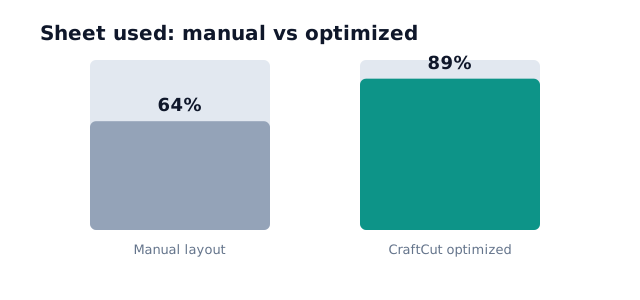
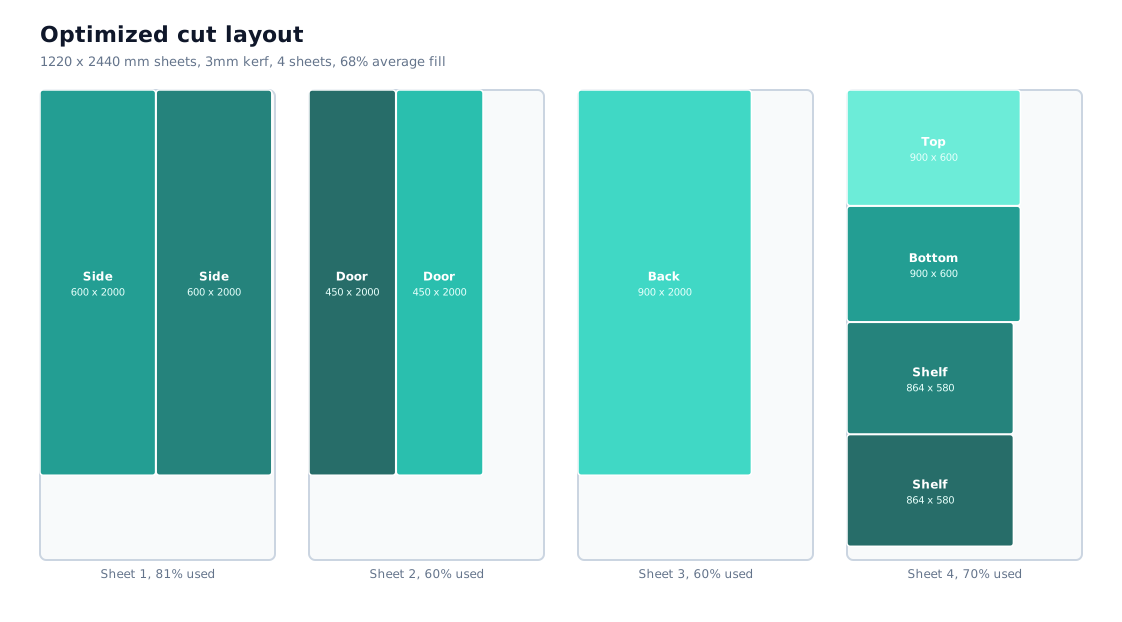
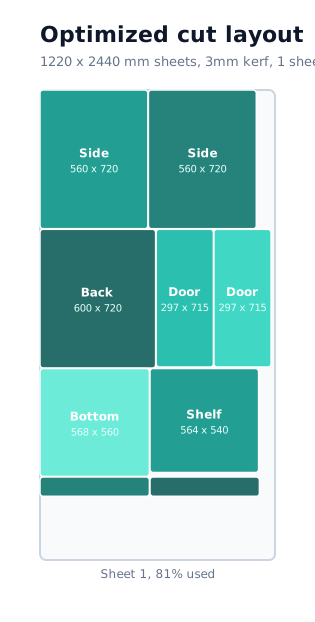
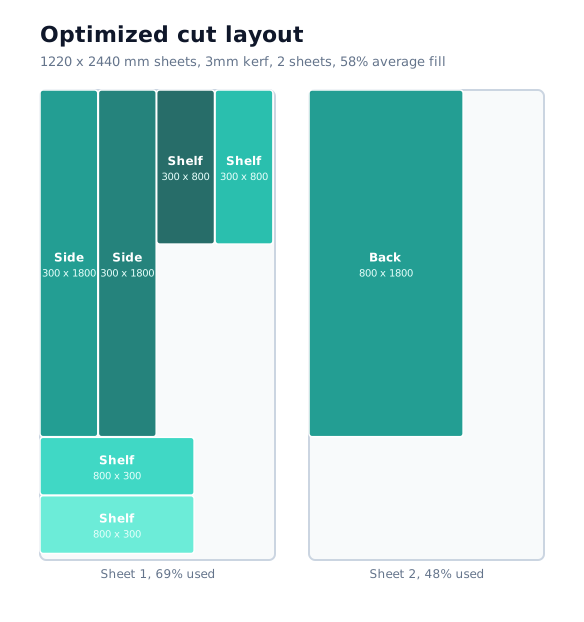
Once you have your sizes, every part becomes a rectangle with a quantity. Two sides, one top, one bottom, four shelves, one back. Now those rectangles need to fit onto full sheets with the least waste, and with the saw kerf figured in so nothing comes up short.
You can do that by hand on graph paper. It is slow, and it is easy to forget the kerf. Or you let a tool pack the parts for you.
The fast path: In CraftCut, type something like "bookshelf, 4 shelves, 800mm wide, 1800mm tall" or start from the bookshelf template. It builds the panels, previews the piece in 3D, and generates an optimized cut list that already accounts for the kerf. Free, no signup. If you want the waste math first, read how to reduce plywood waste.
Design your bookshelf now
Describe it in plain words or start from the template, then take the cut list straight to the saw.
Configure your bookshelf free No account. No download. Free forever tier.FAQ
How thick should plywood be for a bookshelf?
Use 18mm (three-quarter inch) plywood for the sides and shelves of a bookshelf that holds books. Twelve millimetre is fine for a light back panel but too thin for load-bearing shelves.
How wide can a plywood shelf be before it sags?
Keep an unsupported 18mm plywood shelf under about 760mm (30 inches) for a full load of books. For wider spans, add a center divider, a solid front edge, or a back that the shelf screws into.
Can I get a cut list for my bookshelf automatically?
Yes. Describe the bookshelf or start from a template in CraftCut, set your dimensions, and it generates an optimized cut list and cutting diagram for free, with no signup.